

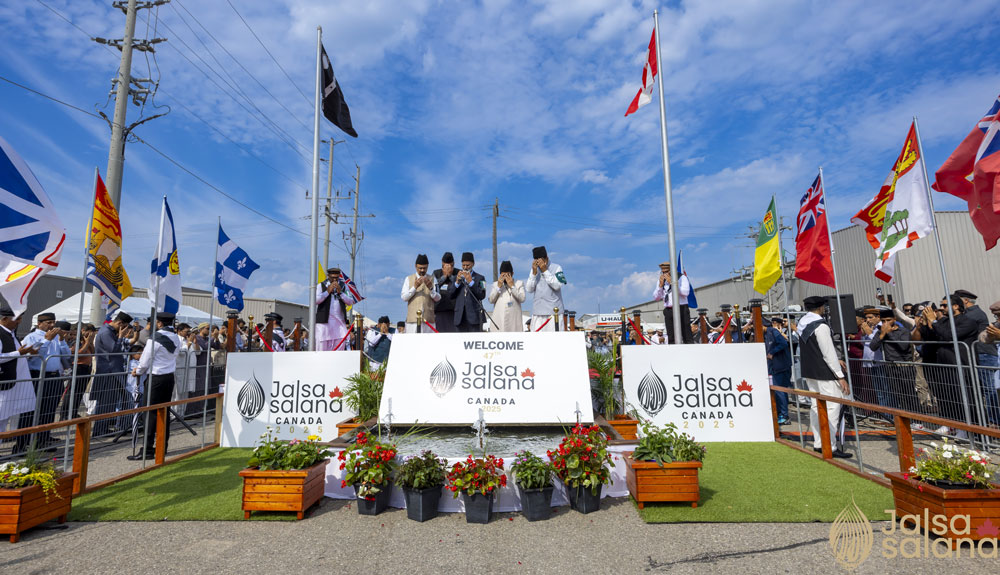
“And say the right word.”
—The Holy Qur’an (33:71)
There are journeys measured in miles.
And there are journeys measured in moments that transform a soul.
This is the story of the second.
For years, Adam believed he was living a successful life.
He had a respectable career, a comfortable home, and a family that loved him. His calendar was full, his responsibilities endless, and every day seemed to disappear into the next.
People admired his achievements.
Yet every night, when silence settled over the house and the lights went out, another companion visited him—a question that refused to leave.
“Is this really what life is meant to be?”
It was not a question of wealth.
Nor of comfort.
It was a question of purpose.
Like countless others, Adam searched for peace where the world told him it could be found—in promotions, possessions, vacations, and accomplishments.
Yet peace remained just beyond his reach, like the horizon that moves farther away with every step.
One summer afternoon, an old friend placed a simple invitation into his hand.
“Come to Jalsa Salana.”
Adam smiled.
“I’ve heard about it,” he replied. “But isn’t it simply another religious convention?”
His friend smiled gently.
“No.”
“It is a place where hearts remember why they were created.”
The conversation lasted less than a minute.
But some words echo long after they are spoken.
Those words stayed with Adam.
Weeks later, curiosity overcame hesitation.
He registered.
He had no idea that one decision would quietly begin rewriting his life.
The morning of Jalsa arrived.
Thousands of people streamed peacefully toward the venue.
There was no race for attention.
No display of wealth.
No competition for importance.
Children walked beside grandparents.
Doctors sat beside labourers.
Business owners shared meals with students.
Every smile seemed genuine.
Every greeting carried warmth.
For the first time in years, Adam witnessed equality—not as an ideal discussed from a podium, but as a reality quietly lived by ordinary people.
Then the recitation of the Holy Qur’an began.
The words did not merely enter his ears.
They settled into places within his heart he had almost forgotten existed.
As the sessions unfolded, Adam found himself listening not only with his mind, but with his conscience.
Could prayer truly change a human life?
How had the Holy Prophet Muhammad (peace and blessings of Allah be upon him) transformed the moral destiny of mankind?
Can truthfulness still become the foundation of peace in a world overflowing with noise and deception?
How can modesty protect dignity in an age obsessed with appearance?
What role does Khilafat play in preserving faith, morality, and unity?
Each address felt less like a lecture and more like an invitation—to think, to reflect, and ultimately, to change.
Faith was presented not as blind acceptance, but as reason illuminated by revelation.
Then came the moment Adam would never forget.
The call to prayer echoed across the grounds.
Thousands rose together.
No reserved seats.
No privileged rows.
No titles.
Only servants standing before their Creator.
As he bowed his head among thousands of others, something unexpected happened.
The walls he had carefully built around his heart began to crumble.
In that single moment, every worldly identity disappeared.
Career.
Status.
Nationality.
Education.
Success.
Failure.
Only one truth remained.
He belonged to Allah.
For the first time in many years, Adam prayed without rehearsed words.
“O Allah… if You are calling me today, do not let me leave the same person who came here.”
The second day felt different.
He was no longer attending speeches.
He was listening for answers.
Science and revelation were presented as companions rather than opponents.
Service to faith was described as a Divine privilege.
Keeping one’s promises was explained not merely as good manners, but as an act of worship.
Every subject seemed to answer questions he had carried silently for years.
Gradually, Adam realised something profound.
Knowledge fills the mind.
But righteousness transforms the heart.
Civilizations may be built by technology.
Yet humanity survives only through truth, compassion, and faith.
When the final day arrived, Adam wished time would slow.
He had travelled to Jalsa searching for answers.
Instead, he discovered better questions.
How truthful am I?
How grateful am I?
How often do I remember the One Who remembers me?
How much of my life serves others instead of myself?
As the concluding address ended and thousands joined together in silent prayer, Adam felt something he had not experienced in years.
Not excitement.
Not emotion.
Peace.
The quiet, enduring peace that settles only upon a heart that has remembered its Lord.
Several months later, a colleague noticed something different.
“You’ve changed,” she remarked.
“You seem… lighter.”
Adam smiled.
“I didn’t simply attend a gathering.”
“I attended a school for the soul.”
That is the true purpose of Jalsa Salana.
It is not merely a conference.
It is not merely a series of lectures.
It is a living reminder that faith is meant to be experienced, not merely discussed.
It is a journey—
from noise to reflection,